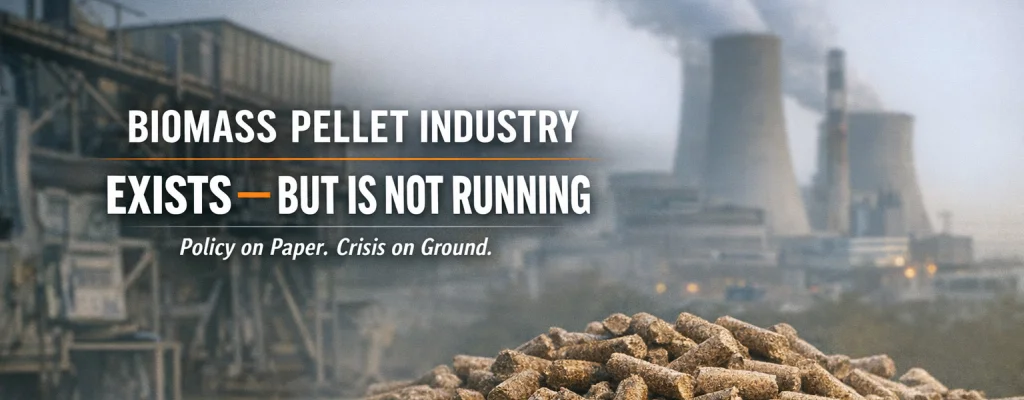
Why Biomass Pellet Manufacturers in India Are Shutting Down – Ground Reality & Policy Gaps
📄 Policy Suggestions to Government of India & State Authorities
To Prevent Collapse of the Biomass Pellet Manufacturing Industry
1️⃣ Current Ground Reality – Key Issues (Industry Truth)
Despite policies and mandates, most biomass pellet units in India are under-utilised or shut down voluntarily. The reasons are structural, not technical.
🔴 Key Pain Points Faced by Pellet Manufacturers
Unviable Pricing
Pellet selling price often does not cover:
Raw material cost
Power & diesel
Labour & maintenance
Logistics
Net margins fall below ₹300–₹800/MT, making operations unsustainable.
Delayed Payments (60–120 Days)
Payments from thermal power plants and large buyers are delayed.
MSME cash flow collapses due to:
EMI pressure
Working capital blockage
No interest compensation
No Assured Offtake
Biomass co-firing mandate exists on paper.
Actual procurement is:
Irregular
Seasonal
Cancelled or reduced without notice
High Operational Risks
Frequent wear & tear (dies, hammers, dryers)
Labour dependency
Fire & dust hazards
Pollution compliance pressure
Logistics Cost Burden
Transportation beyond 200–250 km makes pellets uneconomical.
No rail priority or freight subsidy for pellets.
Policy–Execution Gap
Policy intent is positive, but:
Risk is entirely on pellet manufacturer
No price protection
No payment security mechanism
2️⃣ Warning: If Not Addressed, Industry Will Collapse
If current conditions continue:
Many MSME pellet plants will permanently shut down
Investment confidence will vanish
Co-firing targets will fail
Crop burning & pollution problems will return
Import dependency or monopolies may emerge
👉 Pellet industry collapse = policy failure, not market failure
3️⃣ Immediate Survival Measures for Pellet Industries
🛟 Short-Term Relief (Urgent)
Mandatory Payment Timeline
Pellet buyers (power plants, PSUs) must pay within 30 days
Delay beyond 30 days → interest payable automatically
Price Floor Mechanism
Introduce minimum pellet price linked to:
Raw material index
Power tariff index
Prevents distress selling
Working Capital Support
Interest subvention on pellet plant working capital loans
Credit guarantee for MSME pellet manufacturers
Transport Support
Freight subsidy or reimbursement for:
Road transport up to 300 km
Rail movement where applicable
4️⃣ Policy Improvements for Long-Term Sustainability
🟢 Structural Policy Reforms Needed
1️⃣ Assured Offtake Contracts
Power plants must sign long-term pellet supply agreements (3–5 years)
Fixed minimum monthly quantity commitment
2️⃣ Decentralised Procurement Model
Each thermal plant should:
Source pellets within 300 km radius
Develop local pellet clusters
Reduces logistics cost & ensures rural employment
3️⃣ Risk-Sharing Framework
Govt to share risks related to:
Raw material price volatility
Offtake fluctuation
Similar to renewable PPAs
4️⃣ Incentives for Consistent Operators
Benefits only for plants that:
Operate minimum % of capacity annually
Supply pellets continuously
Discourage subsidy-only projects
5️⃣ Technology & Raw Material Diversification Support
Biomass pellet manufacturing should be treated as critical environmental infrastructure, not a speculative MSME activity.
Without:
Price protection
Payment security
Assured demand
👉 Pellet plants will not run, even if policies exist.
📌 Conclusion (Strong Policy Message)
✔️ Industry exists ✔️ Technology exists ✔️ Biomass availability exists
❌ What is missing is confidence, protection, and predictable execution
⚠️ Disclaimer
This analysis is based on our own operational experience and extensive industry network. It reflects real challenges faced by biomass pellet manufacturers across India and is shared in good faith to encourage constructive policy improvements.